



Black Copper Hat – Flor Negra
Light From Within. Worn From Above.
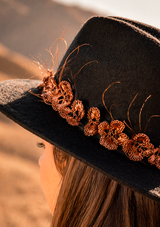
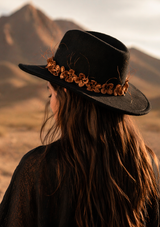
The Flor Negra Hat is where structure meets soul. A deep black felt hat adorned with handcrafted copper wire flowers — each one delicately crocheted by artisan women in El Salvador using upcycled copper wire, a technique that transforms industrial material into wearable art.
The copper blooms trace the brim like a garden that grows inward — intricate, deliberate, and completely unique. No two hats are identical. Each flower is a gesture of precision, patience, and pride.
This is not an accessory. This is a statement of presence.
Black felt hat, Handcrafted upcycled copper wire flowers, Crochet technique by Salvadoran artisans, Copper feather details, Fair trade certified, Eco-friendly materials. Made in El Salvador
Part of the Flor Negra Mother's Day 2026 Collection by Lula Mena.

INCOME

 The norm in rural areas is that children between the ages of 10 to 12 work the fields with their parents taking care of crops.
SCHOOLING


58% of the people that live in rural areas in El Salvador live in overcrowded conditions. When there is overcrowding in families, there is a higher risk of certain problems occurring, such as domestic violence, family disintegration, poor school performance, among others.

300 SALVADORANS TRY TO MIGRATE TO THE UNITED STATES DAILY DUE TO LACK OF WORK OPPORTUNITIES.
When Lula Mena began working in rural communities, many of the young women wanted to immigrate to the United States. Now that they have seen that there is an opportunity for a better life in their community, their perception of immigration has changed. They feel more confident that they will be able to provide for their families without having to leave the country. We want to continue to grow in order to offer more young adults the opportunity to work with us and avoid immigration.

One of the major challenges we faced when we began working with women was gaining the approval of their husbands. Most of the husbands and family members worried that the women would not be able to work and meet the household’s responsibilities.
Now, their husbands prepare dinner, take care of the children, and offer them support. There is still a strong sexist culture, “machismo”, in rural areas of El Salvador that we are trying to change by empowering women.